
AI for Tattoo Shops: What It Does, What It Never Does
AI can cut the DM chaos without taking over your shop. Here's exactly what LVL2's AI does, what it never does, and why you stay the final decision-maker.

The phrase "AI receptionist" makes most tattoo artists flinch, and I get it. Our work is personal. A client doesn't just buy a tattoo, they trust you to put something on their skin forever. The idea of handing the first conversation to a bot feels like the opposite of that. So let me say the most important thing up front: an AI receptionist for a tattoo shop should never make decisions for you. It should make the boring part of your day disappear so you have more time for the part that actually matters.
This is how I think about AI at LVL2. It is a triage assistant for your inbox, not a replacement for you. Below is the honest breakdown of what it does, what it will never do, and why keeping the artist in control is the whole point.
The real problem: your DMs are a part-time job
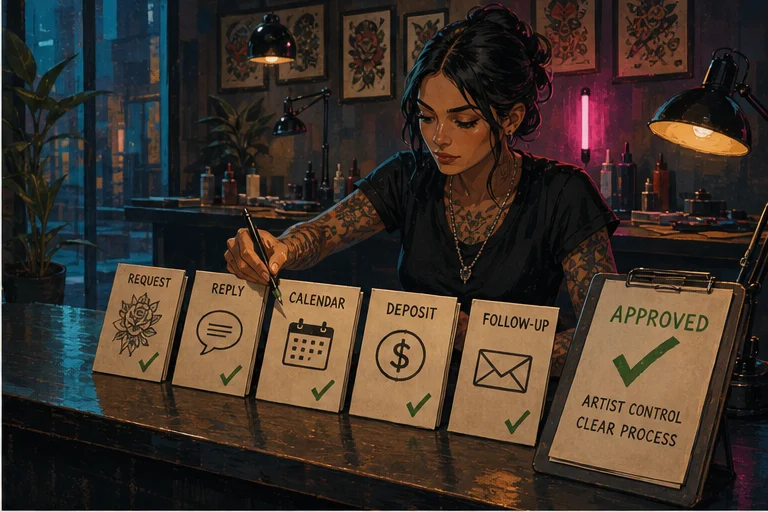
If you book through Instagram, you already know the grind. The same five questions, fifty times a week. "How much for a half sleeve?" "Do you do cover-ups?" "What's your availability?" Half of them never reply after you answer. The other half send a blurry reference photo and "lmk." You answer at midnight between sessions because if you don't reply fast, they book someone else.
That back-and-forth is expensive in a way that's easy to ignore. I wrote about the real cost of DMs for tattoo artists because once you add up the hours, it's a second unpaid job. An AI receptionist exists to give those hours back, not to take your voice out of the equation.
What an AI receptionist actually does
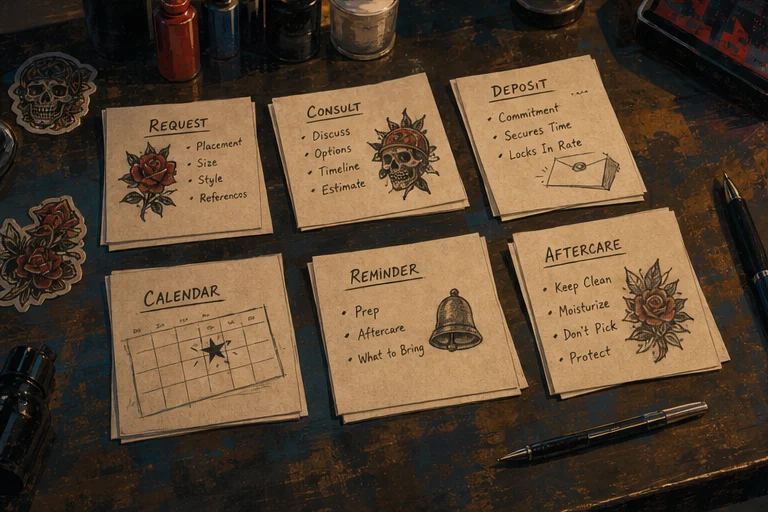
Think of it as the person who sits at the front desk of a busy shop and handles the door so the artists can keep working. It catches the inquiry, asks the obvious follow-up questions, and organizes everything before it ever reaches you.
Concretely, here's the job:
- Triages incoming DMs and messages into structured booking requests instead of a wall of unread chats.
- Collects the intake details you always need anyway — placement, size, color or black-and-grey, budget range, reference images, rough timing.
- Filters out the noise so the low-intent "just curious lol" messages don't bury the people who are ready to book.
- Drafts reminders and follow-ups for appointments and deposits, which you review before anything sends.
- Hands you a clean summary so when you open your phone, you see a real request, not a riddle.
The result is fewer rounds of "and what size?" and more conversations that start with everything already on the table.
What LVL2 AI does
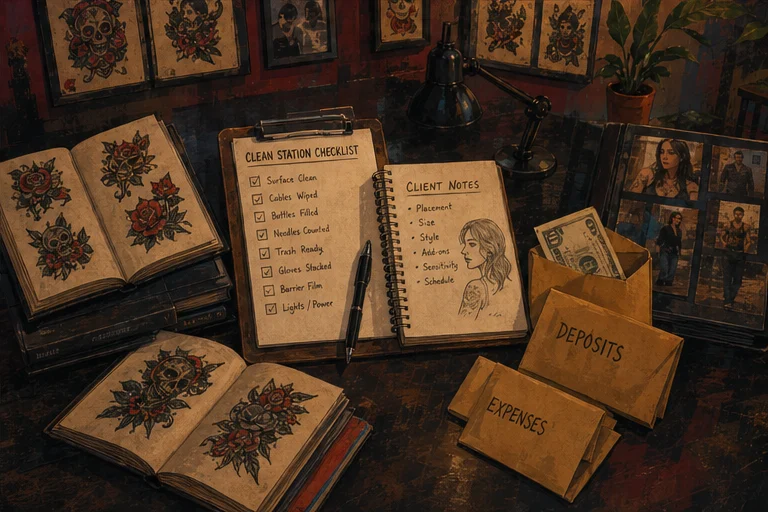
To be specific about our tool, here is exactly where it helps:
- It reads the messy first message and turns it into a structured request with the fields you care about.
- It asks the standard intake questions in your shop's tone, so the client feels guided, not interrogated.
- It pulls reference images and notes into one place attached to the request.
- It drafts deposit and appointment reminders you can approve, edit, or kill with one tap.
- It flags requests that look serious so you spend your attention where it pays off.
If you also use our AI stencil tools, the same principle applies: the machine handles prep work, you make every creative call. Across everything we build for artists, the AI is a helper that clears the desk, never the hand that does the work.
What LVL2 AI never does
This list matters more than the last one, because it's where the trust lives.
- It never auto-books. No appointment lands on your calendar without you confirming it. The AI proposes, you decide.
- It never tattoos, designs, or makes art calls. It does not generate your tattoo, choose placement, or override your judgment on a piece.
- It never replaces your voice. It speaks in your shop's tone for routine intake. Anything that needs you, it routes to you.
- It never quotes a final price as gospel. It can share your ranges and policies, but binding numbers come from you after you've seen the request.
- It never ghosts or auto-rejects a person. Declines and tough conversations stay human.
The artist is always the final decision-maker. That's not a marketing line, it's the architecture. Every meaningful action is a proposal waiting for your approval.
Addressing the real fears
"It'll feel impersonal." The fear is that clients get a cold bot wall. In practice, the impersonal experience is the one where someone waits two days for a reply because you were tattooing. A receptionist that answers the basics quickly, in your voice, and hands the real conversation to you is more personal, not less. You show up with context instead of a cold "hey what's up."
"It'll let in low-intent tire-kickers." It's the opposite. Triage exists to filter. By asking for placement, budget range, and a reference up front, the genuinely interested rise to the top and the "just browsing" messages sort themselves out before they cost you time.
"It'll set wrong expectations." This is a legit risk with any automation, which is why the AI only shares the ranges and policies you set, and never invents a firm quote. The binding conversation is still yours. The AI's job is to make sure you walk into it already knowing what the person wants.
Frequently asked questions
Does the AI book appointments by itself? No. It can prepare and organize a request, draft a reminder, and tee everything up, but it does not put anything on your calendar without your confirmation. You're the one who hits accept.
Will clients know they're talking to AI? You decide how it's framed. The point isn't to trick anyone, it's to answer routine questions fast and route the real conversation to you. Most clients just notice they got a quick, organized reply.
Can it handle my pricing? It can share the ranges and policies you've set, so a client isn't left guessing. It will not commit you to a final number. Firm quotes stay with you, after you've seen placement, size, and reference.
What if someone needs a real conversation? That's the whole design. Anything outside routine intake — a sensitive cover-up, a custom concept, a tricky scheduling situation — gets handed to you. The AI is a filter and an organizer, not a wall.
Do I lose control of my voice and brand? No. The AI follows the tone and rules you set for routine replies, and everything else is yours. You can edit or override any draft before it goes out.
The bottom line
An AI receptionist for a tattoo shop is not about replacing the artist. The best version of this technology is invisible: it eats the repetitive DM grind, organizes the chaos into clean requests, and then gets out of your way so you can do the work only you can do. The guardrail that makes it safe is simple — the artist approves everything that matters, and the AI never crosses the line from helping into deciding.
If you've been losing nights to your inbox, that's exactly the problem LVL2 was built to solve, without ever taking your hands off the wheel. Take a look at how it works and decide for yourself.
Cut the DM chaos, keep control
LVL2's AI structures inquiries into real booking requests — you always have the final say.
Try LVL2 Free