
How Much Do Tattoo Artists Make?
Tattoo artist income spans almost nothing to six figures — and the difference usually isn't talent. It's demand, pricing, and how tightly the calendar is run. Here's the honest math.

"How much do tattoo artists make?" is one of the most-asked questions in the trade, and almost every answer dodges it. The honest answer is: it varies enormously — more than almost any other career — because a tattoo artist's income depends less on a job title and more on demand, pricing, location, and how well they run their books.
Here's the real breakdown.
The short answer
Tattoo artist income spans a huge range:
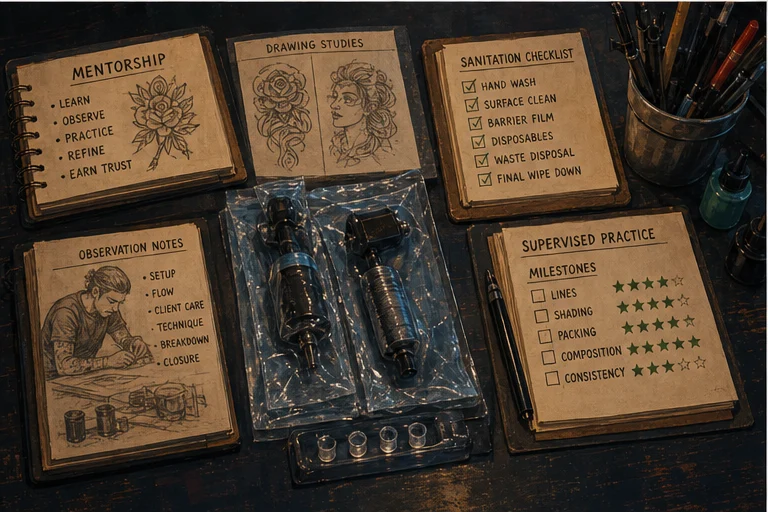
- Apprentices often earn little to nothing while training — the "pay" is the education.
- New licensed artists building a client base frequently earn modest, inconsistent income for the first few years.
- Established artists with a steady book commonly land in a solid middle-class range.
- In-demand and specialist artists — clean style, strong brand, waitlist — can earn well into six figures.
The trade has no salary. Almost everyone is paid per tattoo, which means your income is your demand multiplied by your pricing multiplied by how full your calendar stays.
How tattoo artists actually get paid

Most artists don't earn a wage. They earn per piece, and the shop takes a cut. The three common arrangements:
- Commission split: You keep a percentage (often 50–70%) and the shop keeps the rest in exchange for the space, walk-ins, and overhead.
- Booth/chair rent: You pay the shop a flat weekly or monthly rent and keep 100% of what you charge.
- Shop owner / solo studio: You keep everything but cover all the overhead yourself.
This is why two artists sitting side by side can take home very different money. The one who fills their calendar, prices correctly, and protects their time with deposits keeps more — every single week.
What actually drives the range

Five factors decide where an artist lands:
- Demand. Do clients seek you out, or do you rely on walk-ins? A waitlist changes everything.
- Pricing. Underpricing is the most common way good artists stay broke. Knowing how to price work — and protect it with deposits — directly sets your ceiling. (More on that in our guide to pricing tattoo deposits.)
- Location. A major city with high demand and high rates pays differently than a small town.
- Specialty and style. A recognizable, hard-to-copy style commands premium rates.
- Calendar fill rate. Empty slots and no-shows are pure lost income. An artist booked solid with deposit-protected appointments out-earns a more talented artist whose calendar leaks.
That last point is the one most artists ignore — and the one most within your control.
The hidden tax: no-shows, gaps, and admin
Here's the part nobody puts on the income chart: a tattoo artist's effective hourly rate is wrecked by no-shows, last-minute cancellations, deposit chasing, and hours lost to Instagram DM back-and-forth.
If you charge well but lose two appointments a week to no-shows and spend ten hours managing bookings by hand, your real take-home is far below your headline rate. This is exactly why losing money on no-shows is the silent killer of new artists' income — and why deposits and automated reminders aren't optional once you're serious.
How much do tattoo artists make per year?
Because pay is per-piece, annual income is really a math problem:
(your rate per tattoo) × (tattoos per week) × (weeks you actually work) − (shop cut + overhead + no-show losses)
Run that honestly and you'll see why the range is so wide. Two artists charging the same rate can finish the year tens of thousands of dollars apart based purely on how full and how protected their calendars were. The lever you control is fill rate and pricing discipline — not talent alone.
How to actually increase what you make
You don't raise your income by working more hours. You raise it by closing the leaks:
- Price your work properly and stop discounting out of fear.
- Take deposits so no-shows cost the client, not you.
- Automate reminders so people show up.
- Build demand through a real brand and a booking page that converts, instead of negotiating in DMs.
- Keep your calendar full with a waitlist that fills cancellations automatically.
This is the operational side of earning more — and it's exactly what LVL2 was built to handle, by a working tattoo artist who got tired of watching good artists lose money to bad systems. See pricing and plans when you're ready.
Frequently asked questions
How much do tattoo artists make per hour? Hourly rates vary widely by location, demand, and reputation. But "rate per hour" is misleading — what matters is your effective hourly take-home after the shop cut, overhead, and time lost to no-shows and admin.
Do tattoo artists make good money? They can. The ceiling is high for in-demand artists, but the floor is also low — especially early on. Income tracks demand and business discipline more than raw skill.
How much do tattoo artists make a year? There's no single figure. It ranges from very little for apprentices and new artists to six figures for established, in-demand artists. The biggest variables are pricing, calendar fill rate, and whether deposits protect the book.
Is becoming a tattoo artist worth it financially? For artists who treat it as a craft and a business, yes. The ones who struggle usually have the talent but never set up pricing, deposits, and booking properly. If you're just starting, read how to become a tattoo artist first.
The bottom line
Tattoo artists make anywhere from almost nothing to six figures, and the difference usually isn't talent — it's demand, pricing, and how tightly the calendar is run. You can't control where you start, but you can control your pricing discipline and your no-show rate from day one.
Set the business side up properly and your income stops leaking. That's the part LVL2 handles for you.
Stop your income from leaking
Deposits, automated reminders, and a waitlist that fills cancellations — LVL2 protects the calendar that protects your pay.
Try LVL2 Free